Start with the window
In a small room, the window decides everything. Place the desk beside it or facing it, so daylight falls across the desk rather than behind the screen. Facing the window also stops a small room feeling like a cupboard, because your eye goes out rather than into a wall.
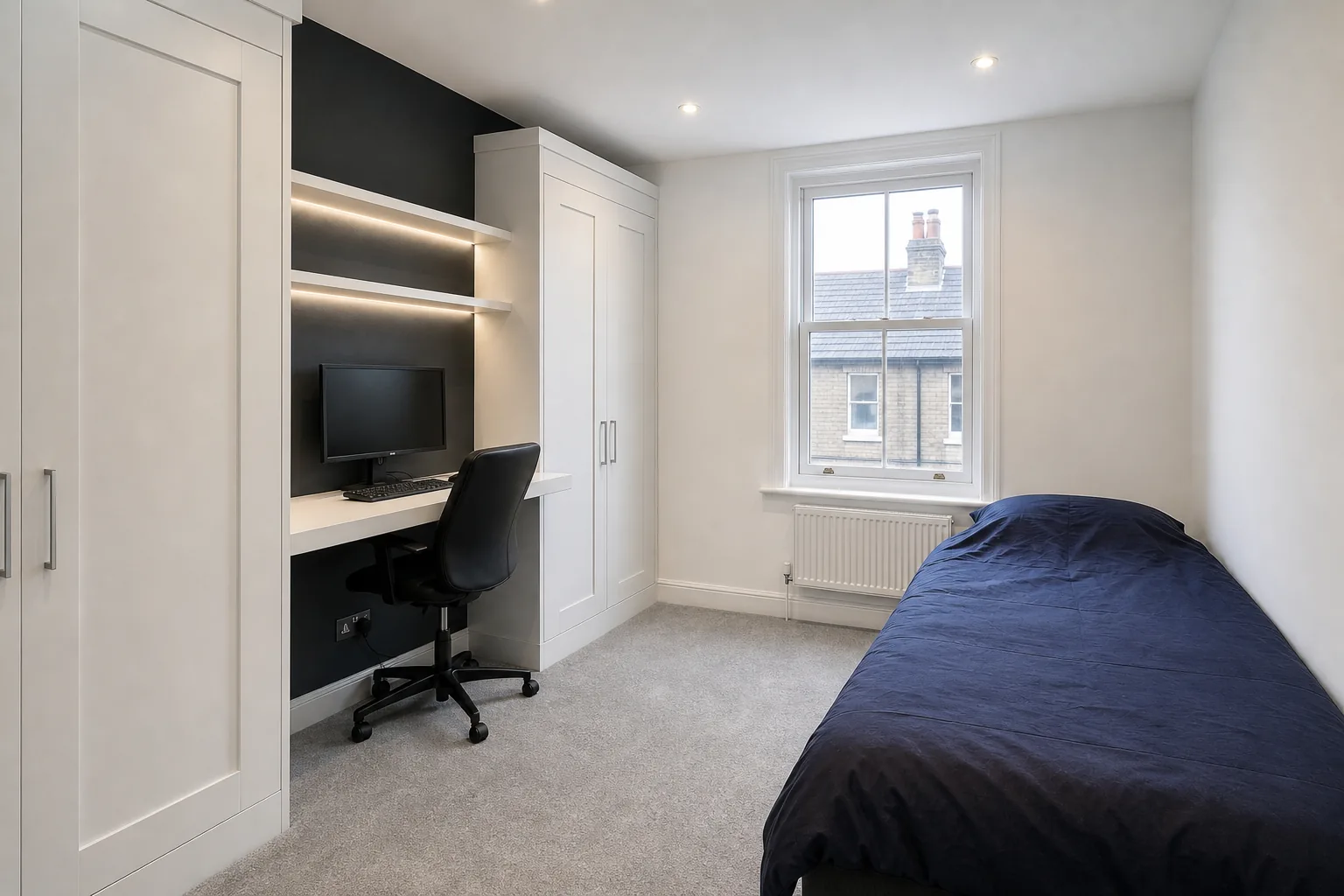
In a typical British box room, around 2 metres by 2.5 metres, a desk run across the full width under the window is often the best layout. It gives you more desk than a freestanding table and leaves the rest of the room free.
Fitted beats freestanding
Freestanding furniture rarely fits a small room well. A fitted desk and shelving built by a joiner can use every centimetre, including the awkward ones around a chimney breast or a sloping ceiling, and it looks calmer because everything lines up.
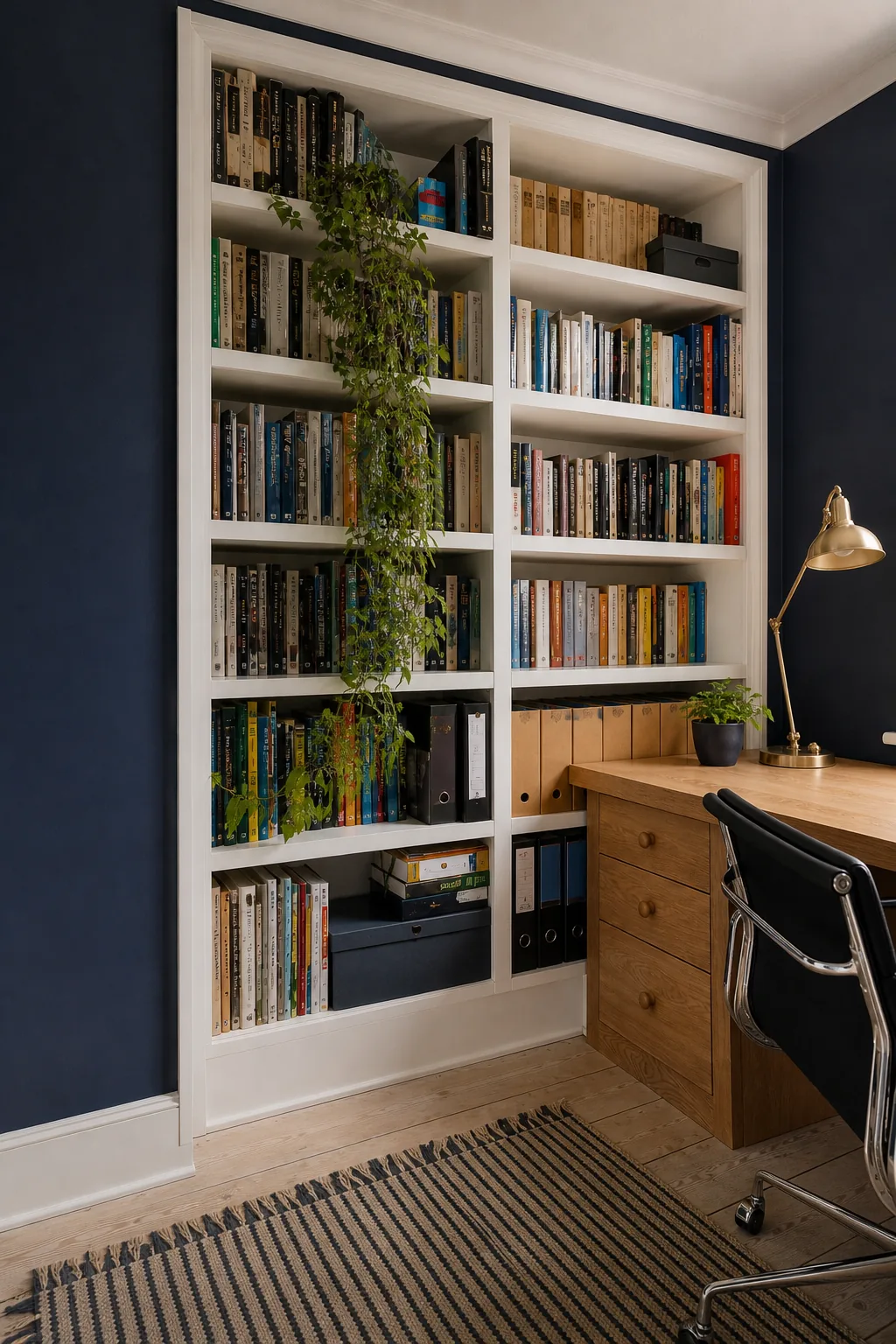
- Run shelving up to the ceiling, with closed cupboards at the bottom for the printer and paperwork
- Use the alcoves either side of a chimney breast for a desk on one side and shelves on the other
- Build drawers into the desk itself rather than adding a pedestal unit
- Fit a sliding or pocket door if a swinging door eats into the room
Offices without a spare room
If there is no spare room at all, look for the dead space. A wide landing, the space under the stairs, a deep alcove in the living room or the end of a bedroom can each take a desk. A pair of joinery doors that close over the desk at the end of the day is the best way to make a shared room feel like home again.
A guest room can work as an office most of the year with a sofa bed or a wall bed, which folds away and leaves the floor clear.
Light, power and sound
Plan the practical things before you decorate. Put in more sockets than you think you need, at desk height, and a USB charging point or two. Add a desk lamp for close work and a warmer light for the evening, so the room is not lit only by a bright ceiling light.
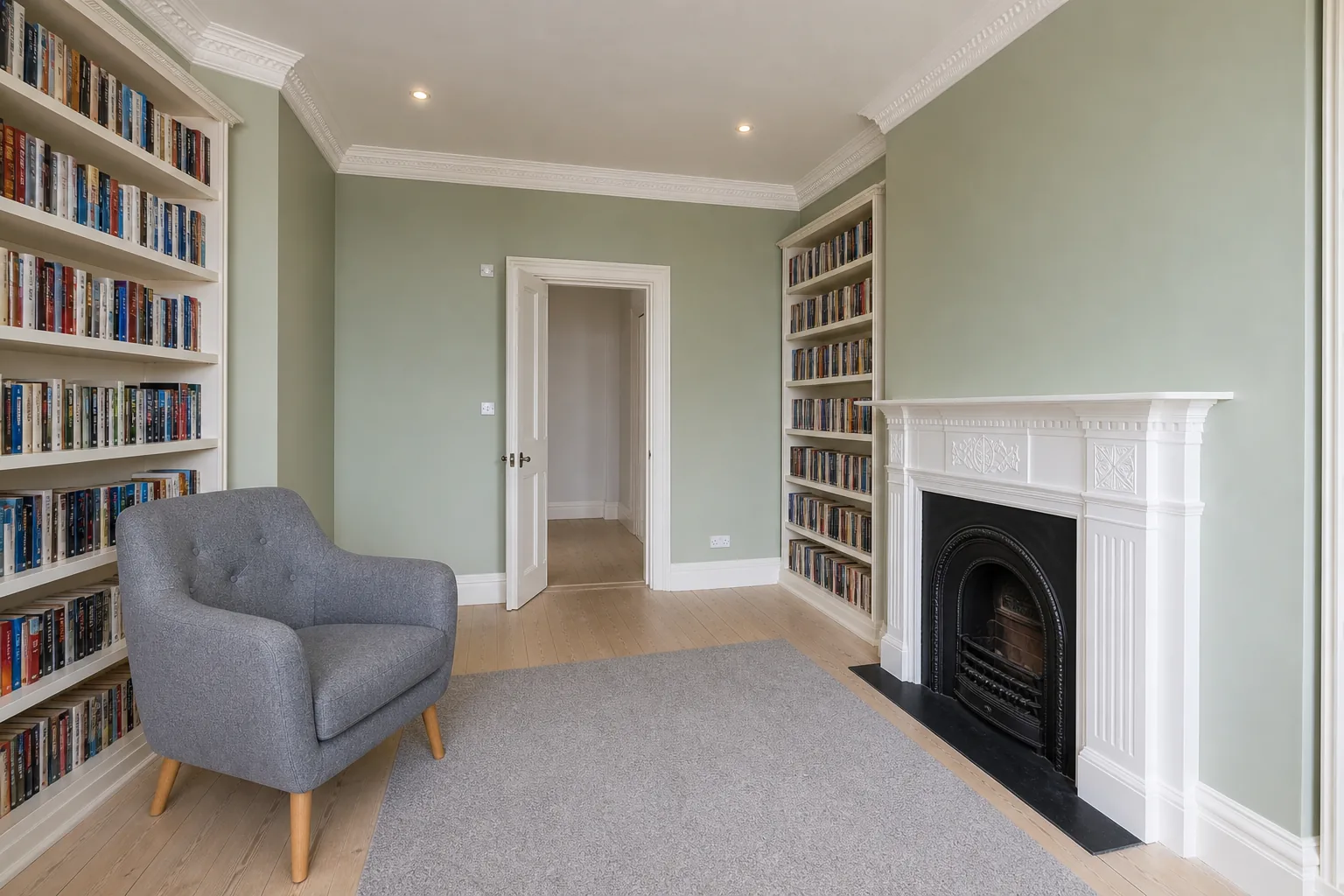
Small rooms can echo on video calls. A rug, curtains and full bookshelves soften the sound more than you would expect.
Colour and finish
Pale colours make a small room feel larger, but a deep colour can work well in an office too, because it makes the room feel snug and focused. If you go dark, keep the desk top and the wall behind the screen lighter, so your eyes are not working against the contrast all day.
Common questions
What is the smallest room you can use as an office?
A space about 1.2 metres wide is enough for a desk and chair. A box room of around 2 metres by 2.5 metres makes a comfortable office for one person with storage.
Should a desk face the wall or the window?
Face the window or sit beside it if you can. You get daylight on the desk without glare on the screen, and a small room feels more open.
Is a fitted home office worth the money?
In a small room it usually is. Fitted joinery uses the full height and the awkward corners, and it often gives you twice the storage of freestanding furniture.